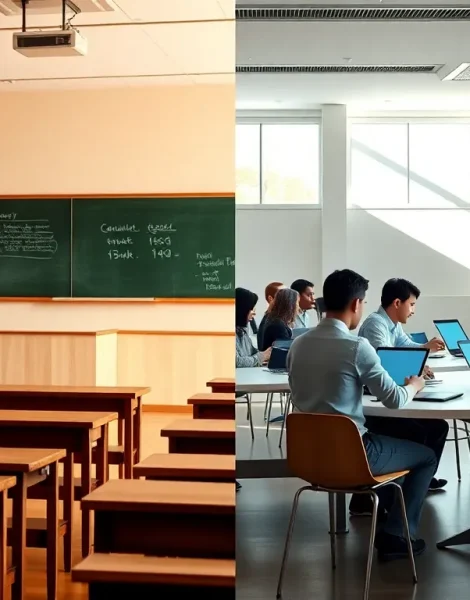
Education today vs. decades past looks remarkably different. Students once sat in rows, copied notes from chalkboards, and relied on textbooks as their primary information source. Now, they access entire libraries from smartphones, attend virtual classes, and collaborate with peers across continents. This shift represents more than a change in tools, it reflects a fundamental rethinking of how people learn, what they learn, and why they learn it. Understanding these differences helps parents, educators, and students appreciate both the progress made and the challenges that remain. This article examines traditional teaching methods, modern approaches, student experiences, and the benefits and obstacles present in contemporary education.
Table of Contents
ToggleKey Takeaways
- Education today vs. decades past has shifted from passive, lecture-based learning to interactive, technology-driven experiences.
- Modern classrooms use digital tools like tablets, learning management systems, and video conferencing to personalize instruction for individual student needs.
- Critical thinking and information evaluation have replaced rote memorization as essential skills in today’s information-rich environment.
- Online platforms have democratized access to quality education, though the digital divide continues to affect rural and low-income communities.
- Today’s students prepare for adaptable, lifelong learning rather than single careers, reflecting a fundamental change in educational goals.
- Screen fatigue and digital distractions present new challenges that educators and students must actively manage.
Traditional Classrooms and Teaching Methods of the Past
For most of the 20th century, education followed a predictable pattern. Teachers stood at the front of classrooms and delivered lectures. Students listened, took notes, and memorized information for exams. This model worked for its time, but it had clear limitations.
Lecture-Based Instruction
The teacher served as the sole authority on subject matter. Students received information passively. Questioning the teacher or offering alternative viewpoints was uncommon, sometimes even discouraged. Education today vs. this older model shows a stark contrast in student engagement levels.
Classrooms featured chalkboards, overhead projectors, and physical textbooks. A student’s research options included the school library, encyclopedias, and whatever books their family owned. Finding information required effort and time.
Standardized Approaches
Curriculum rarely accounted for different learning styles. Visual learners, auditory learners, and hands-on learners all received the same instruction method. Students who struggled with traditional lecture formats often fell behind.
Discipline was strict in many schools. Rote memorization dominated study habits. Students recited facts, dates, and formulas without always understanding their practical applications. Success meant performing well on tests, not necessarily mastering concepts.
Limited Resources
Schools in rural or low-income areas often lacked basic supplies. Access to quality education depended heavily on geography and family income. A student in a well-funded urban school had vastly different opportunities than one in an underfunded rural district. This inequality shaped outcomes for generations.
Modern Education: Technology and New Learning Approaches
Technology has reshaped every aspect of learning. Education today vs. previous generations looks almost unrecognizable in many ways. Digital tools have opened doors that simply didn’t exist before.
Digital Learning Tools
Students now use laptops, tablets, and smartphones as standard classroom equipment. Learning management systems like Google Classroom and Canvas organize assignments, grades, and communications. Video conferencing enables remote learning across any distance.
Online resources provide instant access to information. A student researching ancient Rome can watch documentaries, explore virtual museum tours, read primary sources, and connect with experts, all within minutes. This immediate access changes how students approach research and learning.
Interactive and Personalized Methods
Modern classrooms emphasize active learning. Group projects, discussions, and hands-on experiments replace passive note-taking. Teachers act more as guides than lecturers. They help discovery rather than simply delivering facts.
Adaptive learning software adjusts to individual student needs. If a student struggles with fractions, the program provides additional practice. If another student masters the concept quickly, they move ahead. This personalization was impossible in traditional settings.
Expanded Access
Online courses and open educational resources have democratized learning. A motivated student anywhere can access courses from top universities. Platforms like Khan Academy, Coursera, and edX offer free or affordable education to millions. Education today vs. the past shows remarkable progress in accessibility, though gaps remain.
Key Differences in Student Experience and Expectations
Students today have different expectations than their parents or grandparents did. Their relationship with education reflects broader cultural and technological shifts.
Learning Preferences
Modern students expect interactivity. They’ve grown up with touchscreens, instant feedback, and multimedia content. A static lecture feels outdated to them. They want videos, simulations, and hands-on activities. Education today vs. older models must account for these preferences.
Collaboration matters more than individual achievement to many students. Group projects, peer feedback, and teamwork prepare them for workplaces that value cooperation. The isolated scholar studying alone represents an older ideal.
Information Access and Critical Thinking
Students no longer need to memorize facts that they can look up in seconds. This shifts the educational focus toward analysis, evaluation, and application. Knowing how to find, assess, and use information matters more than storing it in memory.
But, this abundance of information creates new challenges. Students must learn to distinguish reliable sources from misinformation. Critical thinking skills have become essential survival tools in an age of information overload.
Career Preparation
Past generations often studied for specific careers they would hold for decades. Today’s students prepare for jobs that may not exist yet. Flexibility, adaptability, and continuous learning have become core educational goals. The concept of “finishing” one’s education has largely disappeared.
Challenges and Benefits of Today’s Educational Landscape
Modern education offers tremendous advantages, but it also presents real challenges. Understanding both helps stakeholders make better decisions about the future of learning.
Benefits
Flexibility stands out as a major gain. Students can learn at their own pace, revisit difficult material, and access education from anywhere. Working adults can earn degrees while maintaining jobs. Parents can homeschool children using high-quality curricula. Education today vs. rigid past schedules offers far more options.
Diversity in learning methods helps more students succeed. Visual learners watch videos. Auditory learners listen to podcasts. Kinesthetic learners engage with simulations. Multiple pathways to understanding replace the one-size-fits-all approach.
Global perspectives have become accessible. Students collaborate with peers in other countries. They access viewpoints and information from around the world. This exposure prepares them for an interconnected economy and society.
Challenges
Screen fatigue affects many students. Hours spent on devices for learning, socializing, and entertainment take a toll. Mental health concerns among students have increased alongside screen time.
The digital divide persists. Not all students have reliable internet access or adequate devices at home. Rural communities and low-income families still face barriers that technology alone cannot solve. Education today vs. yesterday shows progress, but inequality remains.
Distraction competes constantly for attention. Social media, games, and entertainment are always one click away. Students must develop self-discipline that wasn’t necessary when textbooks were the only option.